
 English
 Español
 Pусский
 Deutsch
 日本語
日本語 العربية
 Türk dili
 Indonesia
 中文
中文
Glass Fiber PLA
Glass Fiber PLA is a composite material made by combining polylactic acid (PLA), a biodegradable thermoplastic derived from renewable resources, with fine glass fibers. This combination is designed to improve the mechanical and thermal performance of standard PLA while preserving many of its desirable processing characteristics. It is widely used in applications that require greater stiffness, dimensional stability, and strength than conventional PLA can provide.PLA on its own is popular because it is easy to print, has low warping, and produces a clean surface finish. However, it can be brittle and may soften under relatively low heat. By reinforcing PLA with glass fibers, the material becomes much more rigid and durable. The fibers help distribute stress more evenly throughout the part, reducing deformation and increasing resistance to bending. As a result, glass fiber PLA is often selected for functional prototypes, structural components, jigs, fixtures, and lightweight industrial parts.One of the key advantages of glass fiber PLA is its improved stiffness. Parts made from this material tend to feel more solid and maintain their shape better under load. It also offers better dimensional accuracy during manufacturing, which is useful for parts that must fit together precisely. Compared with unfilled PLA, it typically shows reduced shrinkage and improved stability after cooling. This makes it attractive for applications where predictable geometry is important.Another benefit is the enhanced surface and appearance of finished parts. Depending on the fiber content and processing method, glass fiber PLA can produce a matte finish that helps hide layer lines in 3D-printed objects. This can give printed parts a more refined and professional look. At the same time, the reinforced structure may make the material slightly more abrasive to printer nozzles, so hardened tooling is often recommended for repeated use.Despite its improvements, glass fiber PLA still retains some of the limitations of PLA-based materials. It generally does not match the impact resistance, heat resistance, or chemical resistance of engineering plastics such as nylon, polycarbonate, or ABS-based composites. For this reason, it is best used in moderate-temperature environments and for parts that need stiffness more than flexibility. Its biodegradable base also means that environmental conditions and disposal methods should be considered carefully.In manufacturing, glass fiber PLA is commonly processed using additive manufacturing, especially fused filament fabrication, but it can also be used in other forming methods depending on the formulation. Proper print settings are important to achieve strong results, including appropriate nozzle temperature, bed temperature, and cooling control. Because the fibers can affect flow behavior, users may need to adjust speed and extrusion settings for the best performance.Overall, glass fiber PLA is a practical composite material that combines the ease of use of PLA with the reinforcing benefits of glass fibers. It is valued for its stiffness, stability, and improved mechanical performance, making it a useful choice for a wide range of prototypes and functional parts.
Produit
Catégorie:
-
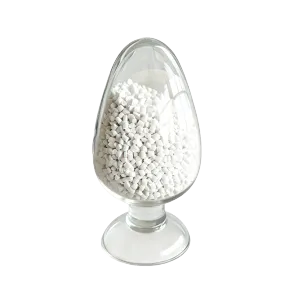
PLA GF Compound
Leur classification: Modified MaterialVues: 13Numéro:Temps de libération: 2026-10-09 19:54:34●Antistatic, glass fiber reinforced or carbon fiber reinforced PLA grades. High rigidity with ESD protection, for 3D printing and structural parts.
Actualités
Catégorie:
Aucun résultat de recherche!
Affaire
Catégorie:
Aucun résultat de recherche!
Vidéo
Catégorie:
Aucun résultat de recherche!
Téléchargement
Catégorie:
Aucun résultat de recherche!
Recrutement
Catégorie:
Aucun résultat de recherche!
Produits recommandés
Aucun résultat de recherche!



 Téléphone